DIABETES IS PERSONAL TO ME. AND SILENCE IS NOT AN OPTION. ❤️
Oct 08, 2026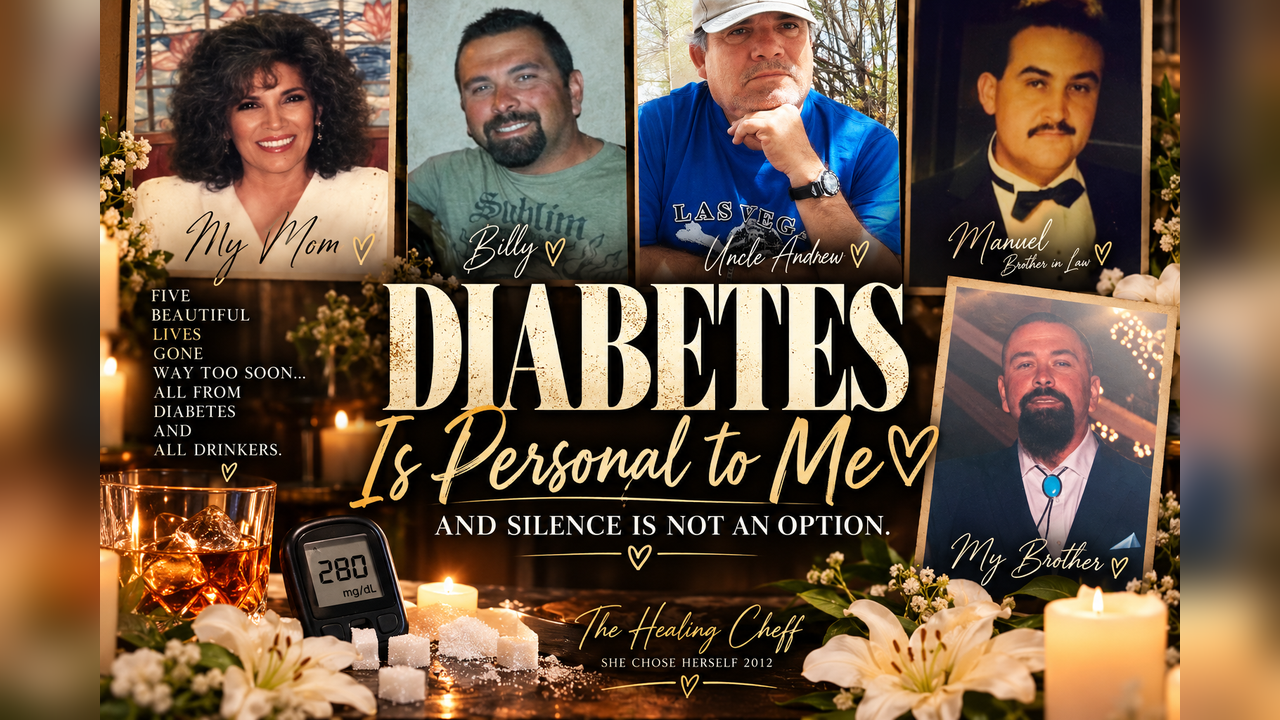
DIABETES IS PERSONAL TO ME. AND SILENCE IS NOT AN OPTION. ❤️
What if I told you that eating healthier isn't always about giving up the foods you love, but learning how to eat them in balance?
She's writing ✍️
I come from a family where diabetes has touched far too many lives. My Nana had diabetes. She died at just 57 years old. My mother had diabetes. She died at just 59 years old. Many of my family members have lived with this disease, and some have died far too young from its complications.
In December 2025, I lost my brother at just 52 years old to complications associated with diabetes. That loss brought home, once again, just how devastating this disease can be.
I grew up watching my mother live with diabetes. So when I tell you this disease is personal to me, I mean I have spent practically my entire life witnessing what it can do to the people we love.
And although I do not have diabetes today, I did experience gestational diabetes during a few of my later pregnancies. I remember my doctor clearly warning me that because my mother had diabetes, my family history, along with my age and weight, would play an important role in my risk of developing type 2 diabetes later in life. That warning has stayed with me all these years. I understand that my family history puts me at greater risk, and that is why I choose to eat with blood sugar balance in mind. For me, this isn't just about eating healthy. It's about prevention, education, and doing everything within my power to protect my health.
I am a chef. I love food. I love beautiful meals, rich flavors, New Mexico chile, homemade recipes, and yes, even dessert! But I also believe that food should nourish our bodies, not simply satisfy our appetites.
And this is where I want to educate people, because there is so much misunderstanding surrounding diabetes.
FIRST, WHAT EXACTLY IS DIABETES?
Let's make this simple.
When we eat carbohydrates, our digestive system breaks many of them down into glucose, which enters our bloodstream. Our pancreas produces a hormone called insulin, which helps move that glucose into our cells to be used for energy.
Think of insulin as a key that helps open the door so our cells can receive the fuel they need.
With type 2 diabetes, our cells become less responsive to insulin, and over time, the pancreas may struggle to produce enough insulin to keep blood sugar within a healthy range.
The result? Too much glucose remains in the bloodstream.
Over time, poorly controlled blood sugar can damage blood vessels, nerves, kidneys, eyes, and the heart.
But here is something I desperately want people to understand.
Eating sugar does not automatically give you diabetes. And eating a balanced meal does not guarantee you will never develop it.
Genetics, family history, activity levels, sleep, metabolic health, alcohol consumption, and other factors all play important roles.
And let's talk about alcohol for a moment, because as a woman living in sobriety, this is especially personal to me. Excessive alcohol consumption can interfere with blood sugar regulation, affect the liver, contribute to weight gain, and increase the risk of metabolic problems. Alcohol can also cause dangerously low blood sugar in certain circumstances, particularly for people taking some diabetes medications.
When you already have a strong family history of diabetes, adding excessive alcohol consumption to the picture can feel like burning the candle at both ends. You're dealing with risks you inherited while potentially adding another burden to a body that is already vulnerable.
And this is one more reason my sobriety means so much to me. I cannot change my genetics. I cannot change the fact that my Nana, my mother, and my brother lived with diabetes. But I can make choices today that give my body a better chance at a healthier tomorrow.
Sobriety isn't just about putting down the alcohol. For me, it's about choosing life, protecting my health, honoring the people I've lost, and refusing to ignore the lessons their lives have taught me.
However, the way we build our meals can make a meaningful difference in managing our blood sugar.
SO LET'S TALK ABOUT BALANCE. 🥑
Suppose I want a beautiful piece of chocolate cake after dinner. Am I going to tell myself I can never enjoy chocolate cake again?
Absolutely not! Anyone who knows me knows I love SUGAR!
But I am going to think about what I eat alongside it and what I have eaten beforehand.
Instead of sitting down with an empty stomach and eating a large dessert by itself, I might first enjoy a meal containing vegetables, fiber, healthy fats, and quality protein.
Why?
Because fiber, protein, and fat can help slow digestion and moderate how quickly glucose enters the bloodstream.
Research also suggests that eating vegetables and protein before carbohydrate rich foods may reduce the blood sugar spike after a meal in some people.
The goal isn't to cancel out the dessert. The goal is to create a more balanced meal and enjoy a reasonable portion.
And no, eating a mountain of vegetables does not erase the carbohydrates in a giant piece of cake! Portions still matter.
HERE IS A SIMPLE WAY TO BUILD YOUR PLATE. 🍽️
Half your plate: Non-starchy vegetables such as broccoli, asparagus, zucchini, spinach, or a beautiful green salad.
🍗 One quarter: Quality protein such as chicken, fish, eggs, turkey, or tofu.
🥑 One quarter: Fiber rich carbohydrates such as beans, lentils, quinoa, or an appropriate portion of whole grains, with healthy fats included in moderation.
And if dessert is on the menu, enjoy a sensible portion while considering the carbohydrates in the entire meal.
You can even apply this thinking to Mexican and New Mexico style foods. We do not have to abandon our culture, our family recipes, or the foods that connect us to the people we love.
We can learn to balance them.
BUT FOOD IS ONLY PART OF THE SOLUTION.
Movement matters. Sleep matters. Managing stress matters. Regular medical care matters.
And let's talk about insulin, because I believe this is another conversation we desperately need to have. Insulin can be lifesaving, and for many people, it is an essential part of managing diabetes. But insulin is not a free pass to eat without balance or ignore the other factors affecting our health. Medication helps manage blood sugar, but it does not replace the importance of nutrition, movement, sleep, and consistent medical care.
I remember my mother warning me about this very thing. She used to tell me that eventually our bodies become immune to medications, that they stop working, and that we find ourselves needing more and more instead of addressing the problem at its roots. Those words stayed with me. And although I understand today that our bodies don't necessarily become immune to diabetes medications, I also understand what she was trying to teach me. Type 2 diabetes can progress over time, sometimes requiring additional medications or higher doses, even when someone is doing everything right. But when there are lifestyle changes within our control that could improve our health, why wouldn't we want to address those too?
I sometimes think of it this way: if we rely on medication while refusing to address the habits we actually have the power to change, we may be treating one part of the problem while neglecting another. It's like putting a bandage on something that also needs attention beneath the surface. That doesn't mean insulin is merely a bandage. It protects lives and helps prevent serious complications. It means that medication and healthy lifestyle choices should work together whenever possible.
We cannot medicate our way out of every unhealthy habit, and we should never mistake managing a disease for having permission to ignore our health. The goal isn't to shame anyone who needs insulin. The goal is to empower people with knowledge, because diabetes deserves a comprehensive approach, not just a prescription.
And perhaps that is the greatest lesson my mother left me. Don't wait until your body is struggling to begin taking care of it. Don't simply ask what medicine can do for you. Ask what you can do for your body, too.
And if diabetes runs in your family, like it does in mine, please do not wait for symptoms before asking your healthcare provider about blood sugar screening, including an A1C test.
Because type 2 diabetes and prediabetes can develop quietly.
I cannot bring back my Nana, my mother, or my brother. And I cannot change the complications they experienced.
But I can take what I have witnessed and turn it into something meaningful.
I can educate. I can cook. I can share what I am learning. I can encourage someone to get screened, rethink a meal, take a walk after dinner, or begin asking questions about their health.
And maybe, just maybe, someone else's mother, father, brother, sister, or grandmother will have more years with the people who love them.
MY MESSAGE IS SIMPLE. ❤️
You do not have to fear food to learn how to nourish your body. You do not have to give up every food you love to make healthier choices. And you certainly do not have to wait for a diagnosis to start caring about your metabolic health.
Eat with knowledge. Eat with balance. Eat with intention. And please, know your numbers.
Because prevention begins with education, and managing diabetes requires more than simply avoiding sugar.
I have buried too many people I love to remain silent about something that deserves so much more understanding.
And as long as God gives me a voice, a kitchen, and an opportunity to serve others, I intend to use all three.
One meal. One conversation. One life at a time. ❤️
She Chose Herself 2012
The Healing Cheff
#DiabetesAwareness #BloodSugarBalance #FoodIsMedicine #RecoverReinventRise #TheHealingCheff
Stay connected with news and updates!
Join our mailing list to receive the latest news and updates from our team.
Don't worry, your information will not be shared.
We hate SPAM. We will never sell your information, for any reason.