🌿 DETACHMENT: THE GREATEST ACT OF LOVE 🌿
Jun 22, 2026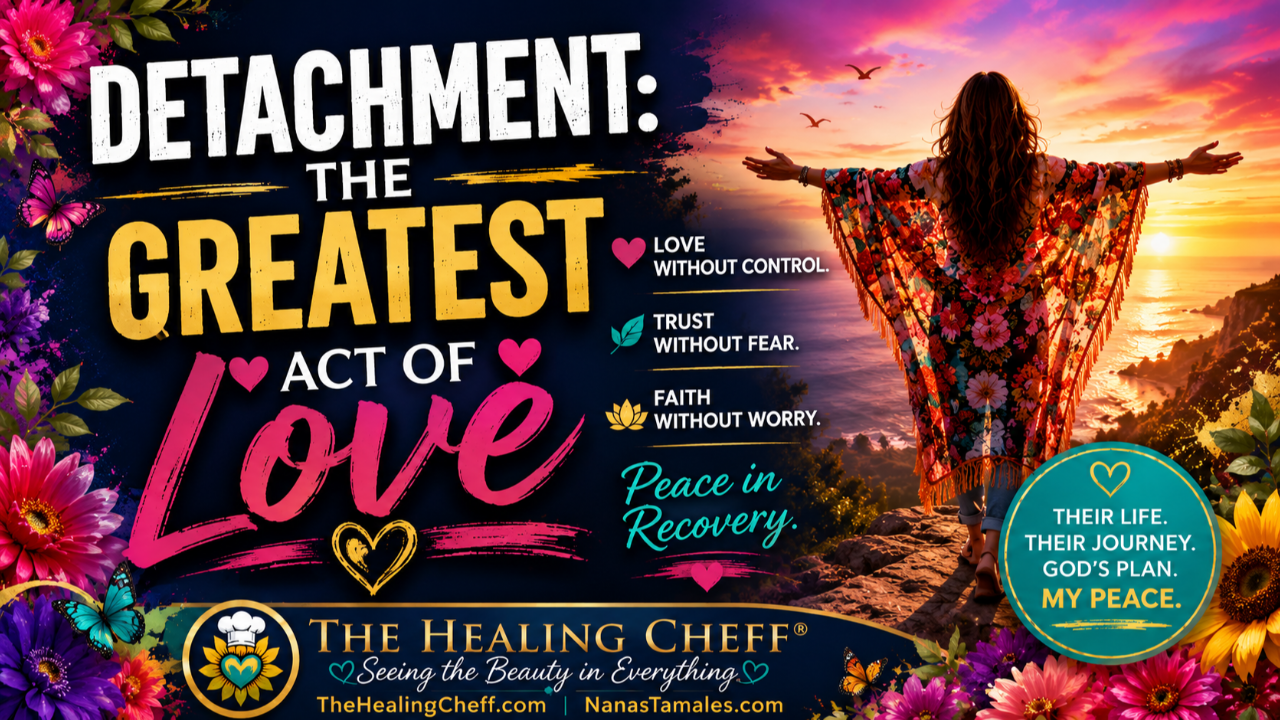
Today I was reading this Al-Anon bookmark on Detachment, and it reminded me how important this principle is—not only for families affected by alcoholism, but for alcoholics in recovery as well. 🌸
As someone who is both an alcoholic and an Al-Anon, I have learned that detachment isn't about abandoning people.
❌ It isn't cold.
❌ It isn't selfish.
❌ It isn't punishment.
❌ And it certainly isn't a lack of love.
✨ DETACHMENT IS LOVE WITHOUT CONTROL. ✨
For years, I thought loving people meant carrying them.
If someone I loved was hurting, I hurt.
If someone I loved was struggling, I immediately started looking for solutions.
If someone I loved was making poor choices, I felt responsible to step in and help.
I thought that was love.
I thought that was what caring people did.
I thought that was what good mothers did. 💕
Looking back, I can see that much of my suffering came from confusing love with responsibility.
I was taking responsibility for things that never belonged to me.
I was trying to carry burdens God never asked me to carry. 🙏
🌿 For years, I thought loving people meant:
❤️ Worrying about them
🛠️ Fixing them
🛟 Rescuing them
🛡️ Protecting them from consequences
🎒 Carrying their burdens
😴 Losing sleep over their choices
🗣️ Trying to convince them to do what I believed was best
But recovery taught me something different.
God never asked me to manage another person's life.
God asked me to manage my own. 🌸
The bookmark says:
✨ We did not cause another person's drinking.
✨ We cannot control another person's drinking.
✨ We cannot cure another person's drinking.
That same principle applies to many areas of life.
🌿 We cannot control:
👧 Our children
💍 Our spouses
👭 Our friends
🌸 Our sponsees
🙏 Another person's recovery
💭 Another person's feelings
🚶 Another person's choices
🗣️ Another person's opinions of us
And when we try, we suffer.
🌸 DETACHMENT IN AA
As alcoholics, we often become attached to outcomes.
We want:
✨ Things to happen our way
✨ People to behave a certain way
✨ Recovery to look a certain way
✨ Life to unfold according to our plans
When life doesn't cooperate with our expectations, we become fearful, resentful, disappointed, anxious, or controlling.
Many of us spend years trying to arrange life so we can feel okay.
Recovery teaches us the opposite.
Recovery teaches us that peace is not found in controlling people and outcomes.
Peace is found in surrendering them. 🙏
Detachment teaches us to release outcomes and trust God.
It is the practice of saying:
🙏 "THY WILL, NOT MINE, BE DONE."
Not because we don't care.
Because we finally understand that we are not God.
🌸 DETACHMENT IN AL-ANON
Al-Anon taught me that I can love someone deeply while allowing them the dignity of their own journey.
I don't have to rescue them.
I don't have to fix them.
I don't have to convince them.
I don't have to suffer because of their choices.
I can love them.
I can pray for them.
I can support them.
And still allow them to experience the natural consequences of their own actions.
That is not cruelty.
That is respect.
That is healthy love. 💕
Sometimes the greatest gift we can give another person is the freedom to learn their own lessons.
🌸 WHAT ABOUT MOTHERS?
This is where detachment becomes especially difficult.
After all, isn't that what a good mother does?
Protect her children?
Absolutely.
In fact, I believe many mothers struggle with detachment because our love runs so deep.
We spend years protecting, teaching, guiding, encouraging, sacrificing, and helping our children navigate life.
It becomes part of who we are.
🌸 A good mother:
❤️ Protects
📚 Teaches
🤗 Comforts
👀 Watches for danger
🙏 Sacrifices
🌱 Encourages
💕 Loves unconditionally
🚂 Would gladly stand in front of a train for her child
That instinct is God-given.
The challenge comes when our children become adults.
What protected them when they were five may actually prevent their growth when they are twenty-five, thirty-five, or fifty-five.
As mothers, we naturally think:
✨ "If I don't help, they'll suffer."
✨ "If I don't step in, they'll make a mistake."
✨ "If I don't fix this, something bad might happen."
But sometimes the lesson is in the mistake.
Sometimes the growth is in the struggle.
Sometimes the wisdom is in the consequence.
And sometimes our interference delays the very thing God is trying to teach them.
Detachment does not ask a mother to stop loving.
It asks her to stop carrying what belongs to someone else.
There is a difference between:
🌸 PROTECTING A CHILD FROM DANGER.
🌸 PROTECTING AN ADULT FROM LIFE.
One is parenting.
⚠️ THE OTHER CAN BECOME RESCUING.
⚠️ THE OTHER CAN BECOME RESCUING, ENABLING, AND INTERFERING WITH GOD'S WORK.
When we continually step in to remove every consequence, solve every problem, absorb every discomfort, or carry every burden for another adult, we may unknowingly stand between them and the very lesson God is trying to teach.
The truth is that growth often comes through experiences we wish our loved ones didn't have to face.
🌿 Sometimes growth comes through:
💪 Struggle
📝 Mistakes
😔 Discomfort
⚖️ Consequences
🙋 Responsibility
📋 Accountability
🙏 Surrender
And sometimes the most loving thing we can do is step aside, trust God, and allow another person to walk their own path.
That doesn't mean we stop loving.
That doesn't mean we stop caring.
That doesn't mean we stop praying.
It simply means we stop trying to do God's job.
As both an alcoholic and an Al-Anon, I have learned that loving people does not mean removing every obstacle from their path.
Sometimes loving them means standing nearby with an open heart and saying:
🙏 I love you.
🙏 I believe in you.
🙏 I'm here if you need me.
🙏 And I trust that God is working in your life even when I cannot see it.
That may be one of the hardest assignments God ever gives a mother.
To move from being the protector to becoming the witness.
To stop holding their hand every step and start holding them in prayer.
And that doesn't make you a bad mother.
It may actually be the final stage of motherhood.
Trusting that what you planted is strong enough to grow without you constantly tending the soil. 🌱
✨ BECAUSE DETACHMENT IS NOT THE ABSENCE OF LOVE.
🙏 IT IS LOVE THAT TRUSTS GOD MORE THAN IT TRUSTS CONTROL.
🌸 WHAT DETACHMENT LOOKS LIKE
Detachment means:
✨ Loving someone without controlling them
✨ Helping without rescuing
✨ Caring without obsessing
✨ Supporting without enabling
✨ Praying without managing outcomes
✨ Speaking truth without forcing change
✨ Allowing people to have their own experience
✨ Trusting God with what belongs to God
🌸 THE HARDEST PART
The hardest part about detachment is that it often feels uncomfortable at first.
Especially for those of us who believe our love is measured by how much we sacrifice, worry, fix, or carry.
Many of us were taught that if we truly loved someone, we would never stop trying to help them.
Recovery has shown me that sometimes helping isn't helping.
Sometimes helping becomes controlling.
Sometimes helping becomes rescuing.
And sometimes helping prevents growth.
But recovery has taught me something beautiful:
🌿 LOVE DOES NOT REQUIRE CONTROL.
Today, when I feel myself becoming attached to:
💭 Another person's choices
🙏 Another person's recovery
😔 Another person's behavior
🗣️ Another person's opinions
I try to remember:
🌿 Their life belongs to them.
🌿 My life belongs to me.
🌿 And we both belong to God.
That is detachment.
And surprisingly, it has brought me more peace than control ever did.
✨ "WE CAN STILL LOVE THE PERSON WITHOUT LIKING THE BEHAVIOR."
— Michelle Ann 🌸🙏🏼☕️✨
THE HEALING CHEFF®
🌿 Seeing the Beauty in Everything 🌿
TheHealingCheff.com | NanasTamales.com
#Recovery #AlcoholicsAnonymous #AlAnon #Detachment #EmotionalSobriety #CodependencyRecovery #SpiritualGrowth #TheHealingCheff #MichelleAnn #RecoveryIsPossible 🌸
Stay connected with news and updates!
Join our mailing list to receive the latest news and updates from our team.
Don't worry, your information will not be shared.
We hate SPAM. We will never sell your information, for any reason.