✨ UNTREATED ALCOHOLISM ✨
May 28, 2026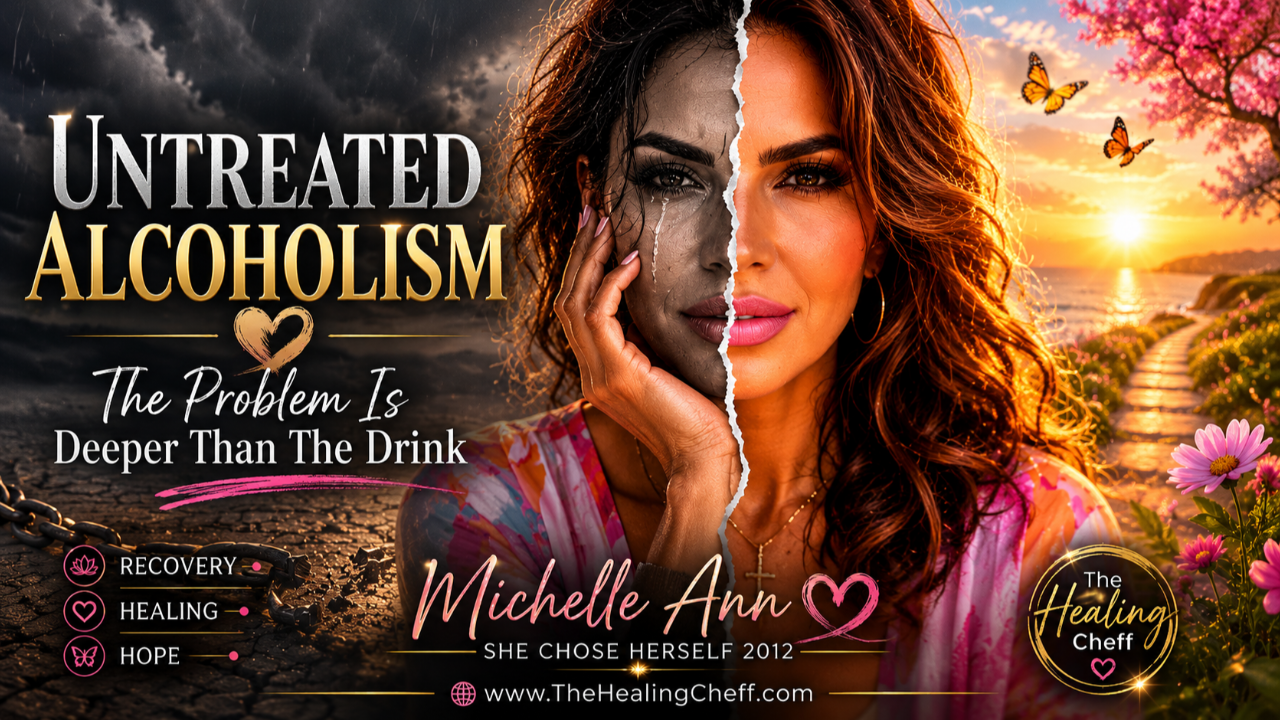
Many people think alcoholism is simply a drinking problem.
But recovery from alcoholism is about much more than putting down the bottle.
The Big Book of AA teaches that alcohol is often the symptom, while the deeper issues involve emotional sobriety, spiritual recovery, emotional regulation, relationships, fear, resentment, and personal growth.
Understanding untreated alcoholism is essential for anyone seeking lasting alcohol addiction recovery, healing from addiction, and true transformation.
What the Big Book describes is the alcoholic who is not drinking but has not experienced a spiritual, emotional, and behavioral transformation.
In AA circles, this is often called a dry drunk.
The alcohol is gone.
The alcoholism remains.
The bottle was only the symptom.
The thinking, reacting, controlling, blaming, resenting, fearing, manipulating, isolating, and self centeredness are still there.
Many old timers point to page 52 of the Big Book when describing untreated alcoholism.
The Big Book asks us:
• Were we having trouble with personal relationships?
• Could we control our emotional natures?
• Were we prey to misery and depression?
• Were we full of fear?
• Were we unhappy?
• Could we not make a living?
• Had we a feeling of uselessness?
• Were we unable to be of real help to other people?
For many alcoholics, this is the picture of untreated alcoholism.
The drinking may have stopped.
The suffering remains.
The alcohol is gone.
The thinking remains.
⚠️ UNTREATED ALCOHOLISM OFTEN LOOKS LIKE:
• Chronic resentment
• Fear
• Self pity
• Blaming others
• Emotional instability
• Control
• Dishonesty
• Jealousy
• Insecurity
• Victim thinking
• Isolation
• Broken promises
• Relationship chaos
• Spiritual disconnection
The Big Book repeatedly points to the problem being in the mind as much as in the alcohol itself.
This is why recovery and healing require much more than abstinence.
True recovery requires:
✨ Emotional sobriety
✨ Self awareness
✨ Accountability
✨ Honesty
✨ Acceptance
✨ Humility
✨ Spiritual growth
✨ Service to others
⚠️ CHRONIC RESENTMENT
The person is angry at everyone.
Always offended.
Always keeping score.
Unable to let things go.
Resentment remains one of the greatest obstacles to recovery from alcoholism.
⚠️ BLAMING OTHERS
Everything is someone else's fault.
• The spouse
• The boss
• The children
• Society
• The government
• The meeting
• The sponsor
Everyone is the problem except them.
Recovery begins when we stop blaming and start taking responsibility.
⚠️ CONTROL
Trying to manage people, outcomes, situations, and relationships.
They become agitated when life does not go their way.
Many people struggling with untreated alcoholism confuse control with safety.
⚠️ EMOTIONAL IMMATURITY
• Tantrums
• Silent treatment
• Withdrawal
• Explosive anger
• Manipulation
• Pouting
The body may be sober, but emotional growth may have stopped years ago.
Healing from addiction often requires learning emotional regulation skills that were never developed.
⚠️ SELF PITY
"Poor me."
Life is unfair.
Nobody understands.
Nobody appreciates them.
Self pity can become just as intoxicating as alcohol.
⚠️ FEAR
Fear of:
• Rejection
• Abandonment
• Being wrong
• Losing control
• Being exposed
Many unhealthy behaviors are simply fear wearing a disguise.
Fear drives much of alcoholism and emotional dysregulation.
⚠️ RESTLESS, IRRITABLE, AND DISCONTENTED
The Big Book specifically talks about being restless, irritable, and discontented.
Nothing is enough.
• Not enough money
• Not enough love
• Not enough attention
• Not enough success
The hole inside never seems to get filled.
Without spiritual recovery, many people continue searching externally for relief from an internal condition.
⚠️ RELATIONSHIP CHAOS
Work may be fine.
The person may even be successful.
But relationships often reveal what is happening underneath.
Untreated alcoholism frequently shows up through:
• Jealousy
• Insecurity
• Selfishness
• Dishonesty
• Inconsistency
• Broken promises
• Poor communication
• Emotional volatility
Work often requires skill.
Relationships require character.
Alcoholism and relationships are deeply connected.
Untreated alcoholism is usually exposed faster in relationships than in careers.
⚠️ TRADING ALCOHOL FOR ANOTHER ADDICTION
The drinking stops.
Then comes:
• Gambling
• Spending
• Sex
• Food
• Workaholism
• Exercise obsession
• Attention seeking
• Social media validation
The underlying spiritual malady simply finds a new outlet.
This is why addiction recovery support must address the whole person, not just the substance.
✨ RECOVERY MEANS:
• Honesty
• Accountability
• Humility
• Acceptance
• Emotional sobriety
• Service
• Spiritual growth
• Inventory
• Amends
• Continuous self examination
✨ IS THERE HOPE?
Absolutely.
If there was no hope, AA would not exist.
Most of us came into recovery carrying many of these same characteristics.
We were:
• Fearful
• Resentful
• Controlling
• Dishonest
• Emotionally immature
• Spiritually sick
• Struggling in relationships
The good news is that alcoholism is treatable.
People change.
People heal.
People grow.
People become accountable.
People learn emotional sobriety.
People learn how to communicate.
People learn humility.
People learn acceptance.
People learn how to love.
The Big Book of AA is a book of transformation.
It is filled with stories of recovery from alcoholism, healing from addiction, and people who were once hopeless, fearful, selfish, dishonest, and broken who found a new way of living.
Recovery is not about becoming perfect.
It is about becoming willing.
Willing to:
• Be honest
• Look at ourselves
• Take responsibility
• Make amends
• Grow
• Let God transform us
Some people stay untreated for years.
Some never seek help.
But many do.
And when they do, miracles happen.
✨ Marriages heal.
✨ Families heal.
✨ Relationships improve.
✨ Character develops.
✨ Peace replaces chaos.
✨ Purpose replaces self destruction.
✨ Hope replaces despair.
And the person who once seemed impossible to help becomes living proof that recovery works.
That is the hope.
Not that people never struggle again.
But that they no longer have to live trapped by the same fear, resentment, selfishness, and emotional pain that once controlled their lives.
A person can be completely sober and still be very sick.
A person can face enormous life challenges and still be emotionally sober.
The difference is not whether alcohol is present.
The difference is whether the alcoholism itself is being treated.
One of the most powerful questions we can ask ourselves is:
If alcohol were removed completely, what behaviors, fears, resentments, control issues, and character defects would still remain?
That is often where the real recovery work begins.
The diagnosis may be alcoholism.
The prognosis can be recovery. 🙏🏻✨
#UntreatedAlcoholism #EmotionalSobriety #AlcoholismRecovery #AddictionRecovery #BigBookAA #RecoveryAndHealing #TraumaAndAddiction #12StepRecovery #SpiritualGrowth #PersonalDevelopment
~ Michelle Ann
She Chose Herself 2012
The Healing Cheff
Stay connected with news and updates!
Join our mailing list to receive the latest news and updates from our team.
Don't worry, your information will not be shared.
We hate SPAM. We will never sell your information, for any reason.